Full Guide
How to Use ElevenLabs for Small-Business Voice Content: The Full Guide
This full guide explains how to turn a bounded voice-content decision into a controlled ElevenLabs trial. It covers script preparation, voice selection and rights, generation, pronunciation review, editing, disclosure, accessibility and the final human release decision.
Main Guide
What ElevenLabs does
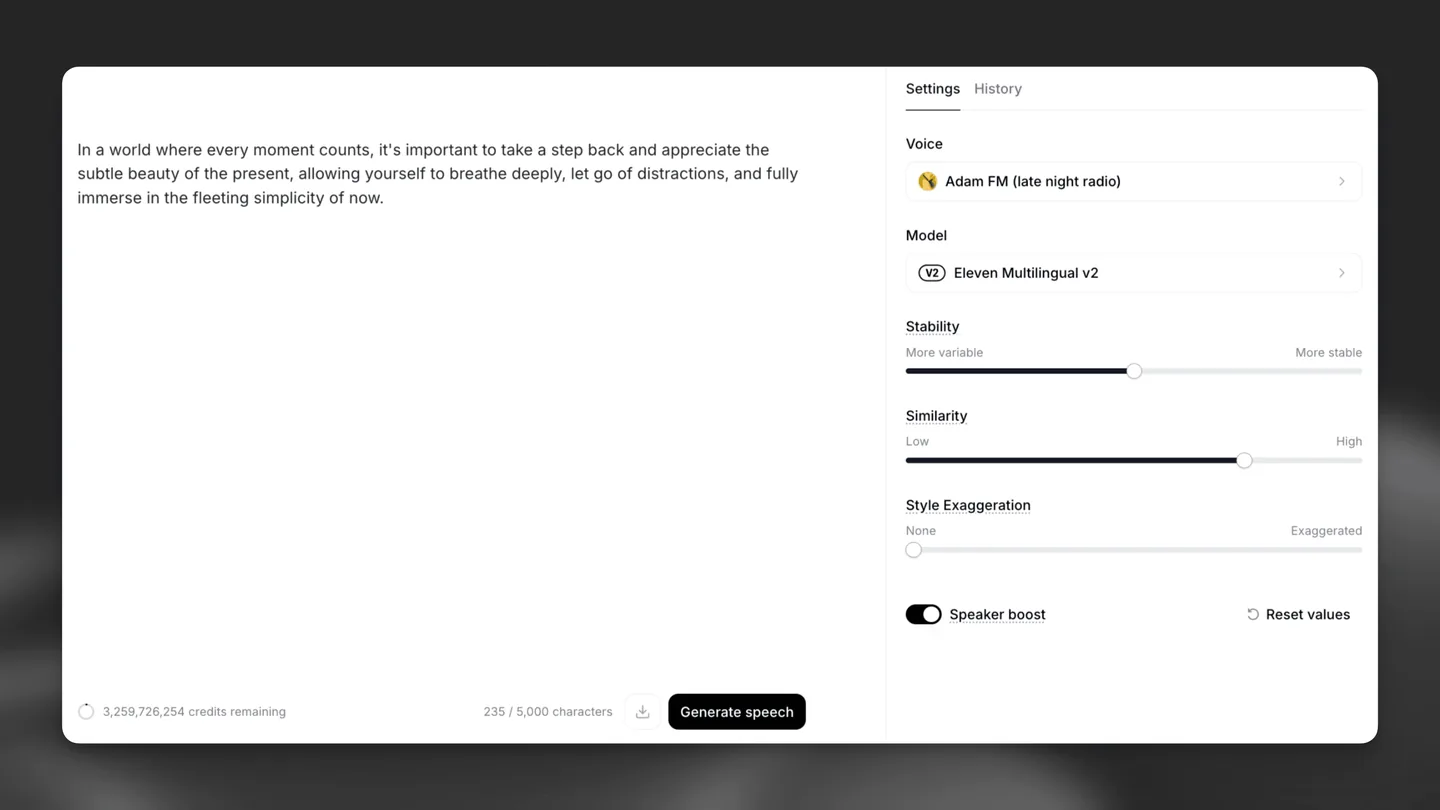
ElevenLabs’ official documentation describes text-to-speech, voice selection, voice design, voice cloning, voice changing and dubbing capabilities. In a basic text-to-speech workflow, a user enters text, selects a voice and model, adjusts available settings and generates audio.
Feature availability does not prove suitability. Voice, model, settings, language, plan terms and the script can affect the workflow and output. Verify the current product and account terms before relying on any capability.
Practical small-business uses to evaluate
Possible bounded uses include:
- narration for a short product or process explainer;
- an audio version of an already approved educational article;
- draft voiceover to test a video’s timing before final production;
- internal training audio that has a named reviewer;
- alternative versions of an approved script for different formats; or
- a localisation or dubbing trial reviewed by someone competent in the target
language.
These are evaluation scenarios, not endorsements or evidence of results. A founder story, customer complaint, regulated communication, emergency message or performance centred on a recognisable person may require a human speaker and specialist review.
Prepare the script before generation
Approve the meaning before choosing a voice. Rewrite long sentences for speech, expand ambiguous abbreviations, check names and numbers, and mark terms that may need pronunciation work. Read the script aloud to find wording that looks clear on a page but sounds awkward.
Record:
- the intended listener and purpose;
- the approved script version;
- factual and legal reviewers;
- required pronunciations;
- the permitted distribution context; and
- the person with final approval.
Do not upload confidential or personal information merely because it appears in an internal draft.
Select a voice responsibly
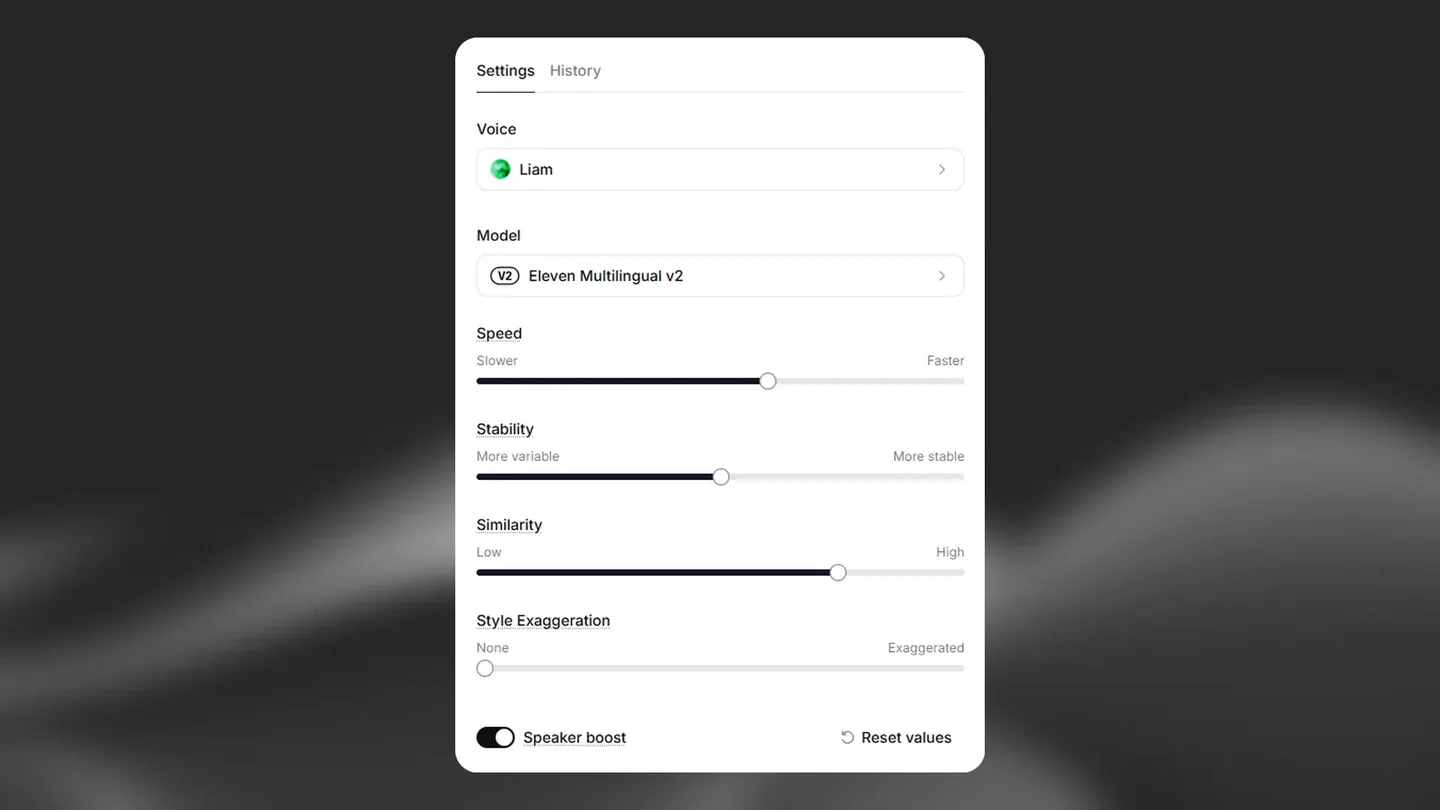
ElevenLabs documents supplied and community voices, generated voices from Voice Design, and cloned voices. Check the current voice information and applicable terms rather than assuming every available voice has identical rights or availability.
Evaluate:
- intelligibility and consistency across the whole script;
- accent, pacing and tone for the actual audience;
- names, technical terms, numbers and emphasis;
- whether the voice might imply a real speaker or endorsement;
- availability and usage constraints; and
- whether a human or properly licensed stock voice is more suitable.
Voice Design can generate voice options from a description, but ElevenLabs labels the feature experimental and notes that output quality can vary. That is a reason to test carefully, not a reason to describe the result as production ready.
Voice cloning and consent boundaries
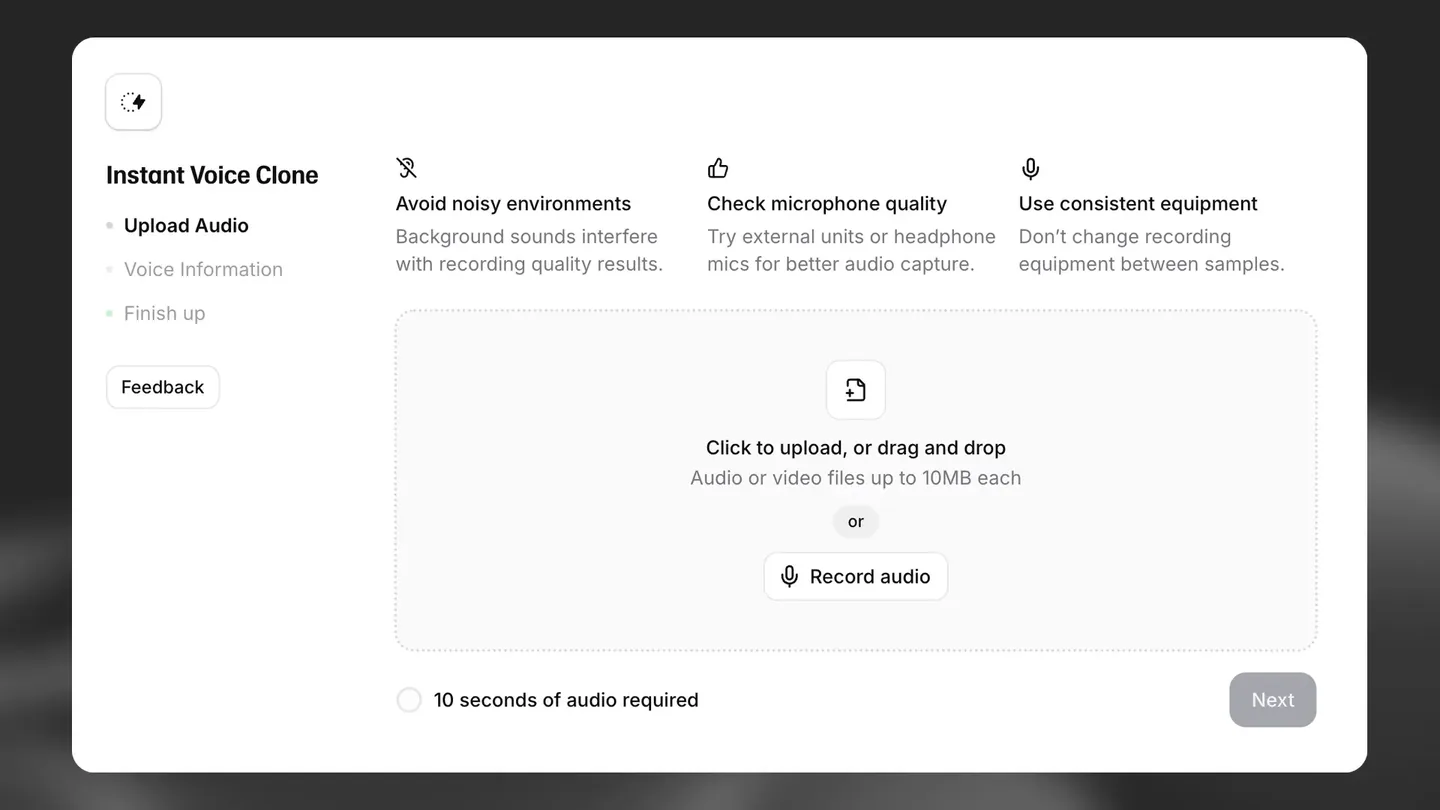
Do not clone a voice found online or supplied without documented authority. ElevenLabs’ Instant Voice Cloning documentation requires confirmation of the right and consent to clone a voice. Its Professional Voice Cloning workflow includes verification, and its use policy restricts unauthorised, deceptive and harmful uses.
Before any cloning trial, record:
- whose voice is involved;
- what consent and rights exist;
- the exact approved purpose and channels;
- who can access the samples and generated voice;
- how long source recordings and outputs are retained; and
- what happens if consent is withdrawn.
Provider safeguards do not replace legal, contractual, privacy or ethical responsibilities. Stop and seek specialist advice when the position is unclear.
Generate, edit and review
Use the approved script and retain the settings needed to understand the test. Generate a short passage first. Listen for changes in meaning as well as sound quality, then correct the script or pronunciation rather than repeatedly accepting an unsuitable result.
The final reviewer should check:
- every word against the approved script;
- pronunciation, pacing, emphasis and pauses;
- factual meaning and brand suitability;
- edits, joins and audio levels;
- captions or transcript accuracy;
- voice rights and disclosure; and
- the final page, video or channel where the audio will appear.
Keep source scripts, approval records and the final selected output together so that later corrections remain possible.
Dubbing and localisation
ElevenLabs documents dubbing workflows for audio and video. A technical dubbing capability does not remove the need for a competent language review. Translation may change meaning, tone, legal wording or cultural context.
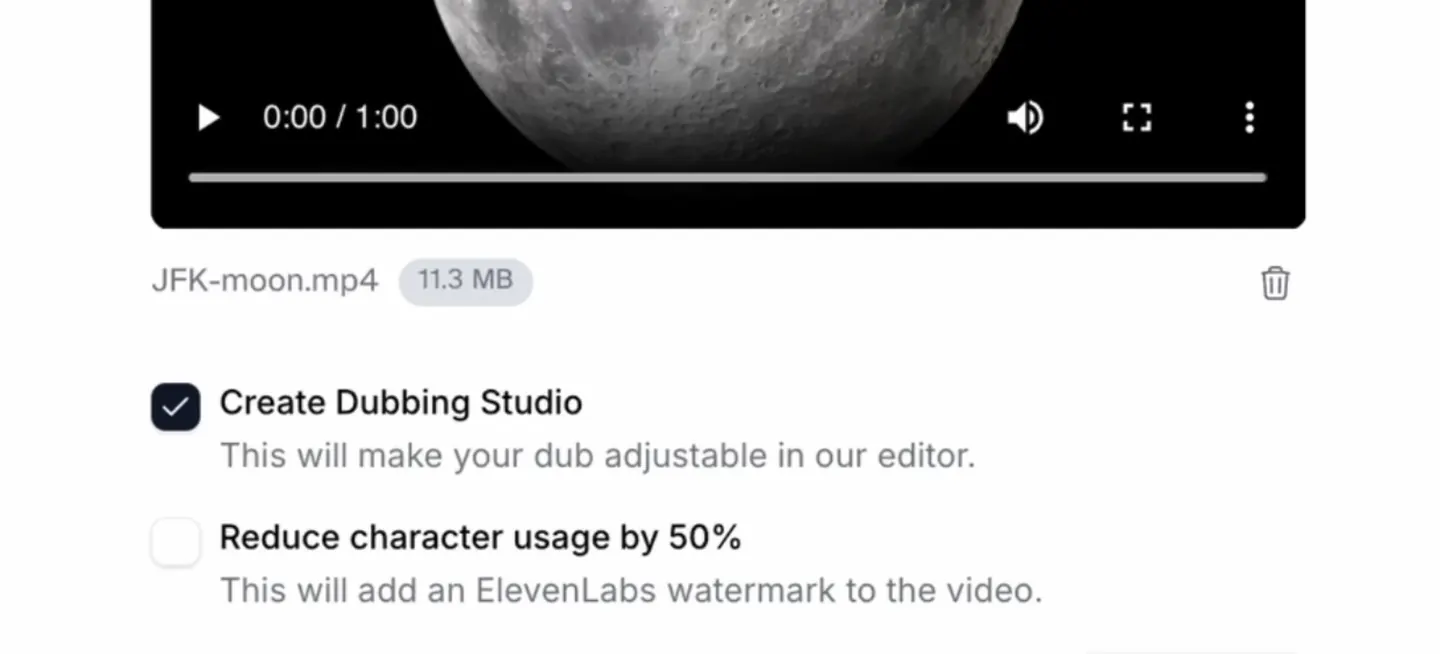
Use a short, non-sensitive sample and require a target-language reviewer to compare meaning, names, figures, timing and on-screen context. Do not release a language version that no accountable person can assess.
Transparency and disclosure
Consider whether the listener would reasonably expect to know that a voice is synthetic. Context matters, but a business should never use generated speech to mislead people about who is speaking, what a person endorsed or whether a real conversation occurred.
Commercial disclosure and synthetic-media disclosure address different issues. Where a commercial relationship applies, it should be disclosed clearly. That does not replace any disclosure needed about synthetic media itself.
Uses that are unsuitable or high risk
Do not use this workflow for:
- impersonation or an implied endorsement without authority;
- deceptive calls, messages or identity verification;
- sensitive personal, medical, legal or financial communications without
appropriate controls and specialist review;
- unsupervised public statements;
- cloning where rights or consent are uncertain; or
- language output that no qualified reviewer can understand.
Use a human speaker, voice performer, production specialist, translator, licensed stock voice, captions or written content when those choices better protect meaning and trust.
Evaluate cost and value
Check current ElevenLabs plan terms immediately before a trial. The official documentation may distinguish capabilities, usage and commercial rights by plan, and these details can change. This guide intentionally does not quote a price, allowance or commission.
Compare:
- script preparation and fact-checking;
- generations and revisions;
- editing, captioning and language review;
- rights and consent administration;
- storage and approval work;
- the cost and quality of a human alternative; and
- how often the approved use genuinely recurs.
A low entry price or free access does not establish that a production workflow is inexpensive or commercially permitted.
A practical ElevenLabs trial
- Choose a one- or two-minute, low-risk script.
- Name the owner, audience and final reviewer.
- Remove unnecessary personal or confidential information.
- Select only a voice with a clear, appropriate usage basis.
- Record the current product and plan evidence being relied upon.
- Generate a short sample before the complete script.
- Review words, meaning, pronunciation, pacing and audio quality.
- Add and verify captions or a transcript where the asset requires them.
- Compare the whole workflow with a human or non-audio alternative.
- Decide to stop, revise or seek approval for the bounded use only.
When another solution may be more appropriate
Choose a human recording when personal authenticity is central. Consider a professional voice performer for distinctive performance or durable brand audio, a production specialist for complex editing, a translator for localisation, or written content when audio adds little value.
Other AI voice tools can also be evaluated against the same script, rights, quality and workflow criteria. This article does not establish comparative superiority.
FAQ
Has GrowthPilot tested ElevenLabs?
GrowthPilot has not recorded hands-on testing for this article. Product facts come from the cited first-party documentation and require revalidation.
Can a business clone any employee or public voice?
No. Obtain appropriate rights and consent, follow the provider’s rules and stop when the authority or intended use is unclear.
Is ElevenLabs right for every small business?
This article makes no best or ranking claim. Suitability requires a controlled trial and comparison with relevant alternatives.
Should synthetic audio be disclosed?
Consider audience expectations, the context and applicable requirements. Never use generated audio to mislead someone about identity, speech or endorsement.
Can generated audio be published without review?
No. A named person should approve the script, audio, rights, accessibility and final presentation.
Conclusion
ElevenLabs may be useful when a small business has a defined voice-content task, clear rights and a disciplined review process. A good trial is short, reversible and judged against a human or non-audio alternative—not against the novelty of generation alone.
Next Step
Complete the trial checklist with one approved script. Keep the output private until rights, quality, disclosure and final human approval are documented.
Sources reviewed
- ElevenLabs: Text to Speech
- ElevenLabs: Text to Speech capability
- ElevenLabs: Voices
- ElevenLabs: Voice Design
- ElevenLabs: Voice cloning
- ElevenLabs: Instant Voice Cloning
- ElevenLabs: Dubbing
- ElevenLabs: Prohibited Use Policy
- Information Commissioner’s Office: Artificial intelligence
Product features, plan terms and provider policies can change. Check the current first-party sources before relying on this guide. Sources reviewed 7 August 2026.
GrowthPilot may earn a commission from qualifying purchases through commercial links, at no additional cost to you. Commercial availability does not determine inclusion or assessment.